
Aluminium Magnet Wire: A Buyer's Guide to Selection and Verification
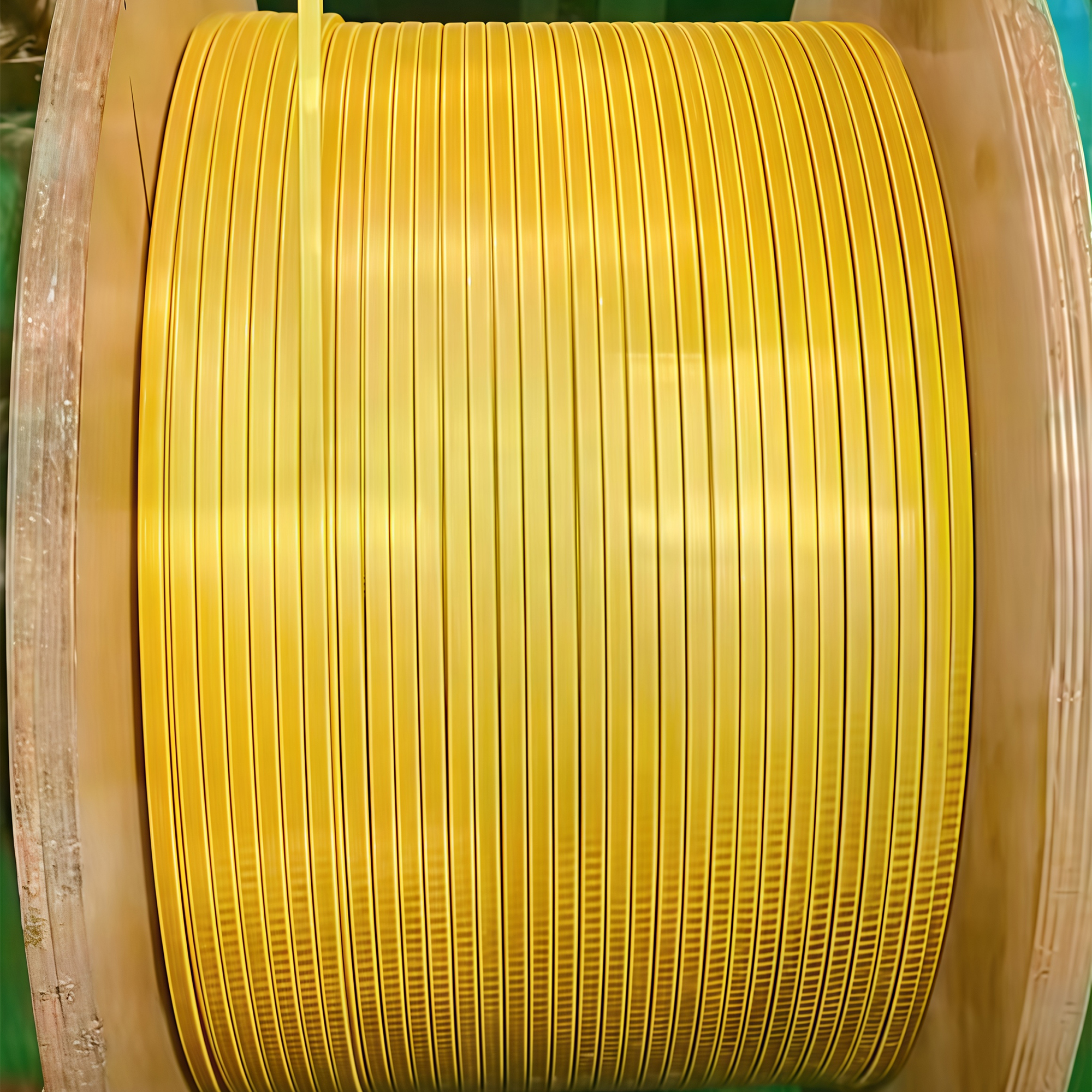
<h2>What aluminium magnet wire is and where it fits</h2>
<p>Aluminium magnet wire is a winding conductor made from aluminium, usually round or rectangular, covered with electrical insulation. It performs the same electromagnetic function as copper magnet wire: when energised, it creates a magnetic field. The difference is the conductor metal, and that difference drives most of the engineering and procurement decisions that follow.</p>
<p>Aluminium is lighter than copper and generally lower in cost per kilogram, but it has higher electrical resistance and lower mechanical strength. Those trade-offs mean aluminium magnet wire is not a drop-in substitute in every winding. It is commonly considered where weight reduction matters, where copper supply or cost is a constraint, or where the winding design has been adjusted for the conductor.</p>
<p>This guide is written for buyers moving from consideration to supplier evaluation. It covers the insulation types you are likely to see, the questions that separate a workable specification from an expensive mistake, and the evidence to request before you place an order.</p>
<h2>The main types of aluminium magnet wire</h2>
<p>Magnet wire is classified primarily by its insulation system. The conductor may be bare aluminium, enamelled aluminium, or aluminium with a fibrous covering such as glass fibre or paper. Each covering changes the temperature capability, mechanical protection, and winding process the wire suits.</p>
<h3>Enamelled aluminium wire</h3>
<p>Enamelled round or flat aluminium wire uses a thin polymer film as the primary insulation. It is used where winding space is tight and a thin wall is an advantage. The enamel grade determines the temperature class and the chemical and electrical performance. Buyers should confirm the enamel type and class rather than treating "enamelled" as a single specification.</p>
<h3>Glass-fibre-covered aluminium wire</h3>
<p>Glass-fibre-covered aluminium wire adds a fibrous layer, often combined with a resin or enamel, for mechanical protection and higher temperature capability. Single and double glass-fibre coverings are both supplied. Double glass-fibre covering gives a more robust outer layer for windings that see mechanical stress or require additional dielectric strength.</p>
<p>Polyester glass-fibre-covered aluminium wire combines a polyester layer with glass fibre. The polyester contributes dielectric and bonding behaviour, while the glass fibre provides mechanical reinforcement. The right choice depends on the temperature class, the winding method, and the environment the equipment will operate in.</p>
<h3>Paper-covered aluminium wire</h3>
<p>Paper-covered aluminium wire uses electrical-grade paper as insulation. It is typically chosen for oil-immersed transformer and reactor windings where the paper insulation is compatible with the insulating fluid and the winding process. NOMEX paper-covered aluminium wire is a distinct option where the paper type is specified by the equipment design.</p>
<h3>Film-covered aluminium wire</h3>
<p>Polyester film-covered and polyester-imide film-covered aluminium wire use polymer film as the insulation layer. These constructions are selected when the design calls for a specific film insulation rather than a fibrous covering. As with enamel, the film type and grade should be stated on the purchase specification.</p>
<h3>Bare flat aluminium wire</h3>
<p>Bare flat aluminium wire has no applied insulation. It is used where insulation is added during the winding or assembly process, or where the conductor is part of a larger insulated system. Buyers should confirm dimensions, edge condition, and temper, because bare conductor quality directly affects subsequent insulation and winding performance.</p>
<h2>Aluminium versus copper magnet wire: a decision framework</h2>
<p>The conductor choice is an engineering decision before it is a purchasing decision. The table below summarises the practical differences that matter most to buyers and designers. It is a starting point for discussion with the winding designer, not a substitute for their calculation.</p>
<table>
<thead>
<tr>
<th>Consideration</th>
<th>Aluminium magnet wire</th>
<th>Copper magnet wire</th>
</tr>
</thead>
<tbody>
<tr>
<td>Weight</td>
<td>Lighter for the same conductor volume</td>
<td>Heavier</td>
</tr>
<tr>
<td>Electrical resistance</td>
<td>Higher resistance for the same cross-section</td>
<td>Lower resistance for the same cross-section</td>
</tr>
<tr>
<td>Mechanical strength and ductility</td>
<td>Lower; requires care in winding and termination</td>
<td>Higher; more forgiving in tight windings</td>
</tr>
<tr>
<td>Typical design response</td>
<td>Larger conductor cross-section or adjusted winding design</td>
<td>Smaller cross-section for the same current</td>
</tr>
<tr>
<td>Joining and termination</td>
<td>Needs suitable techniques and attention to oxide layers</td>
<td>Well-established joining methods</td>
</tr>
<tr>
<td>Where it often fits</td>
<td>Weight-sensitive equipment, cost-driven designs with re-engineered windings</td>
<td>Space-constrained or high-performance windings</td>
</tr>
</tbody>
</table>
<p>A common mistake is to compare aluminium and copper on price per kilogram alone. Because aluminium has higher resistance, a winding may need a larger conductor to achieve the same performance. The meaningful comparison is cost and performance of the finished winding, not the raw material price.</p>
<h2>Specification details buyers must pin down</h2>
<p>Most disputes in magnet wire procurement come from specifications that were assumed rather than written. Before requesting quotations, confirm the following with the winding designer and put them in the enquiry document.</p>
<ul>
<li><strong>Conductor dimensions and tolerances.</strong> Round wire diameter or flat wire thickness and width, with the tolerance standard that applies.</li>
<li><strong>Conductor temper.</strong> Soft or annealed temper is common for winding, but the requirement should be explicit.</li>
<li><strong>Insulation type and class.</strong> Enamel, glass fibre, paper, film, or a combination, with the temperature class stated.</li>
<li><strong>Covering build.</strong> Single or double covering, and the nominal insulation thickness if the design depends on it.</li>
<li><strong>Overall dimensions.</strong> The outside diameter or build of the finished wire, not just the conductor size.</li>
<li><strong>Electrical requirements.</strong> Resistance per unit length or resistivity limits, and any dielectric test requirements.</li>
<li><strong>Mechanical requirements.</strong> Flexibility, adhesion of the insulation, and elongation where relevant.</li>
<li><strong>Packaging and marking.</strong> Spool or reel type, wire length per package, and labelling.</li>
</ul>
<p>Where a standard is referenced, name the standard and edition. "To standard" without an edition is not a specification. If the equipment design does not cite a standard, ask the designer which properties are critical and specify those directly.</p>
<h2>How to evaluate an aluminium magnet wire manufacturer</h2>
<p>Supplier evaluation should test whether the manufacturer can meet your specification consistently, not just whether they can quote a price. The following evidence is worth requesting during evaluation.</p>
<h3>Documentation and traceability</h3>
<ul>
<li>Material certificates or inspection records for the conductor and insulation materials.</li>
<li>Dimensional and electrical test data for the supplied wire, with the test method stated.</li>
<li>Traceability from finished package to production batch.</li>
<li>A written specification sheet that matches your enquiry, including tolerances and test methods.</li>
</ul>
<h3>Process capability</h3>
<p>Ask how the manufacturer controls conductor dimensions, insulation build, and covering concentricity. For glass-fibre and paper coverings, the uniformity of the covering and the consistency of the impregnation or bonding process matter. A manufacturer who can explain their in-process checks is easier to audit than one who only provides final test certificates.</p>
<h3>Range and focus</h3>
<p>A manufacturer with a broad magnet wire range may be able to supply copper and aluminium constructions from the same source, which can simplify qualification. The reference company for this article, Jiangsu Shuangyou Electrical Materials Co., Ltd., lists copper and aluminium magnet wire products including enamelled, glass-fibre-covered, paper-covered, and film-covered constructions. Buyers should still verify the specific construction, class, and dimensions they need against the supplier's current capability.</p>
<h3>Questions to ask before qualification</h3>
<ul>
<li>Which insulation classes and covering combinations do you routinely produce for aluminium conductors?</li>
<li>What test methods do you use for dimensions, resistance, and insulation integrity?</li>
<li>Can you supply samples from a production batch with test data?</li>
<li>How do you handle a specification that falls outside your standard range?</li>
<li>What documentation accompanies each shipment?</li>
</ul>
<h2>Sample and order validation</h2>
<p>A sample is only useful if it is tested against the same criteria as production. When you receive samples, check dimensions, insulation build, resistance, and handling behaviour during a trial winding. Record the batch and test conditions so the results can be compared with later deliveries.</p>
<p>For first orders, agree on an inspection plan before shipment. This may include dimensional checks, electrical tests, and a visual inspection of the covering. If the wire is destined for a safety-critical or long-life application, discuss whether third-party testing is appropriate. The cost of testing is usually small compared with the cost of reworking a finished winding.</p>
<h2>Warning signs in supplier responses</h2>
<ul>
<li>Quotations that list only a conductor size and a price, with no insulation class or covering detail.</li>
<li>Reluctance to provide test data or to name test methods.</li>
<li>Specification sheets that copy a standard without stating the edition or the specific properties.</li>
<li>Claims of performance that are not tied to a test report or a stated standard.</li>
<li>Inconsistent answers between the sales contact and the technical contact.</li>
</ul>
<p>None of these is proof of a bad supplier, but each is a reason to ask a follow-up question before you commit to a qualification programme.</p>
<h2>Next steps for buyers</h2>
<p>Start with the winding design: confirm whether aluminium is technically suitable and what conductor size and insulation class the design requires. Then write a specification that states dimensions, tolerances, insulation type and class, test methods, and documentation. Use that specification to request samples and quotations from two or three manufacturers, and compare the responses against the same criteria.</p>
<p>For buyers evaluating glass-fibre-covered aluminium constructions, the double glass-fibre-covered aluminium wire and polyester glass-fibre-covered aluminium wire are common starting points. Confirm the temperature class and covering build with the designer before approaching suppliers, and ask each manufacturer to state the construction they are quoting in the same terms.</p>